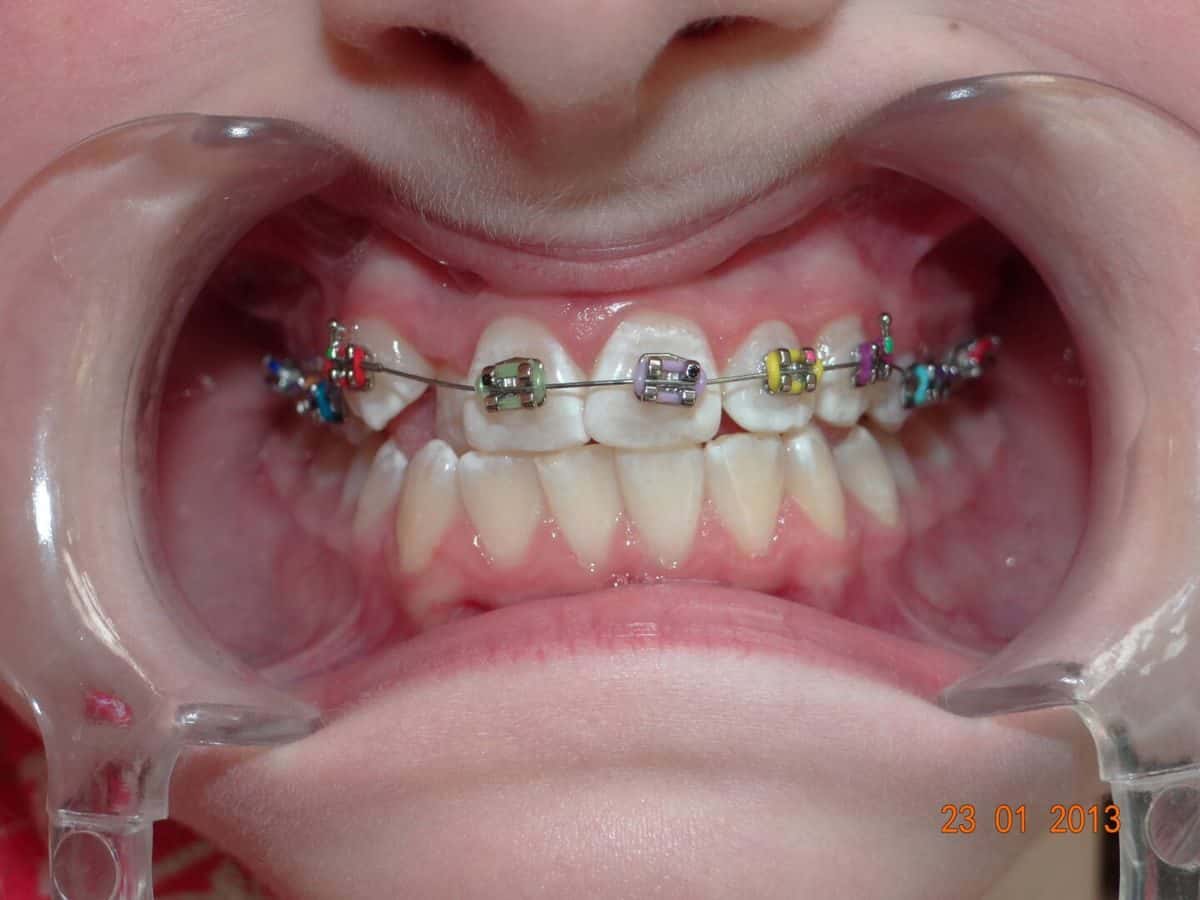
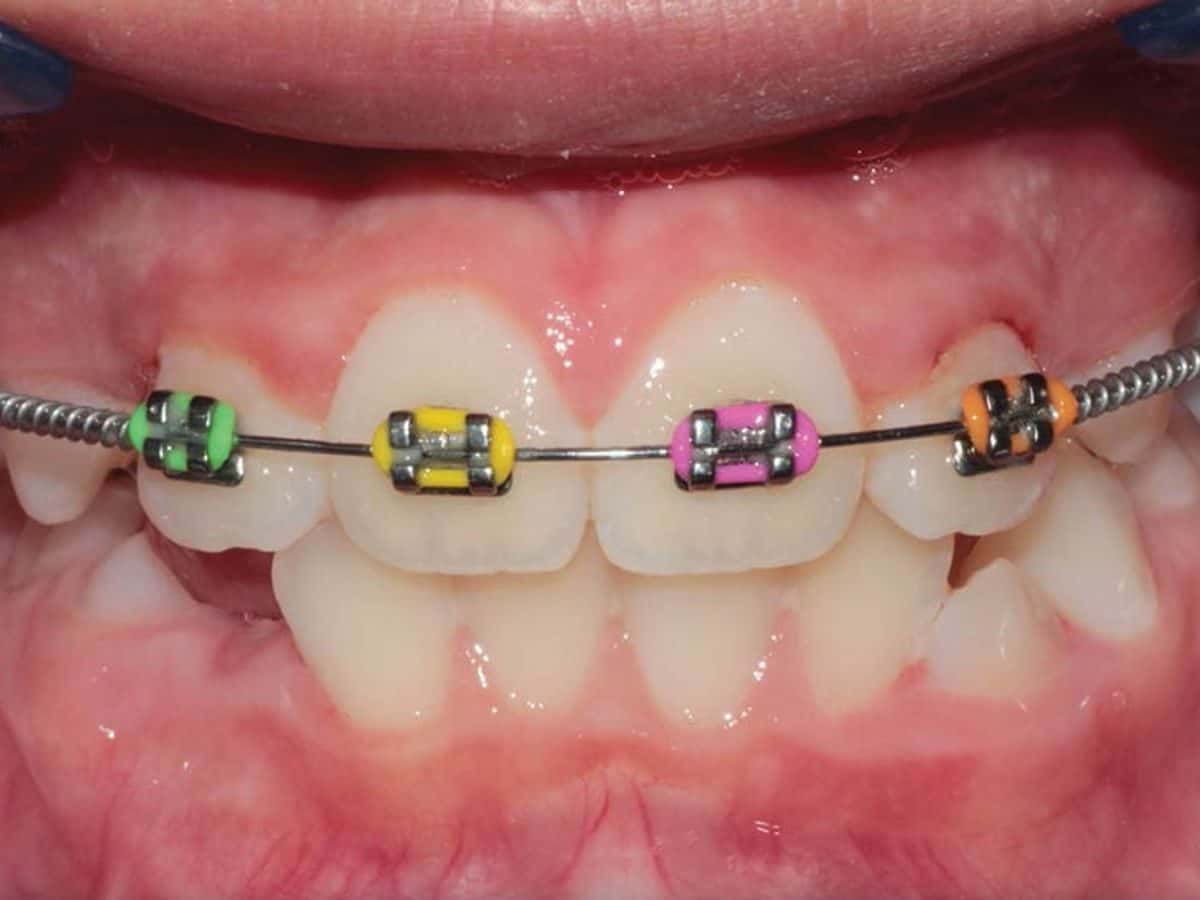
Straight teeth are more than a beautiful smile - they are healthier teeth. Dr Stefan Zahmanov leads the orthodontic treatment of children and adults at the clinic.
Orthodontics is the speciality Dr. Zahmanov Dental Clinic is best known for in Plovdiv. Straightening your teeth changes the way you look and smile - but the benefits go far beyond aesthetics.
Crowded or misaligned teeth are harder to clean and trap more plaque, which means a higher risk of decay and gum inflammation. An incorrect bite also puts extra strain on the jaw joint.
The good news is that crooked teeth can be straightened at almost any age. We will propose a plan tailored to your age, bite and wishes, and stay with you from the first examination through to keeping the result for good.
01
Why orthodontic treatment is worth it
Well-aligned teeth make daily hygiene easier and distribute chewing forces evenly. You feel the difference every day - when eating, speaking and smiling.
Easier cleaning and a lower risk of decay
Healthier gums and less inflammation
A correct bite and less strain on the jaw joint
Confidence in your smile - at any age
02
Treatment by age
For children aged 7–9 we often work with removable appliances. They guide jaw growth at just the right moment and can shorten - or sometimes even prevent - later treatment with braces.
From around 10–14, once most permanent teeth have come through, we move on to fixed braces. The same applies to adults - healthy teeth can be moved at any age.
At an early age we also use specialised appliances, depending on the specific problem:
Rapid palatal expanderWhen the jaws are too narrow and there is not enough room for the permanent teeth to erupt, the jaw needs widening. The appliance is bonded to the permanent sixth and/or fourth teeth - its small size doesn't interfere with eating or speech, and results are quick, reliable and long-lasting.See a real case
HeadgearHarnessing growth to balance the jaws is early orthodontics' greatest advantage. Headgear is worn at night - it holds the upper jaw in position while the lower jaw catches up front-to-back.
Twin BlockA functional appliance for growing children whose lower jaw has fallen behind and whose upper front teeth stick out. Its upper and lower parts interlock at a precise angle and guide the lower jaw forward every time the mouth closes. Growth is put to work for the treatment - the profile becomes more balanced and the front teeth settle into a correct bite.See a real case
Face maskAn underbite is one of orthodontics' greatest challenges. When treatment starts early, the child's active growth allows it to be fully corrected. The mask stimulates and guides the growth of the upper jaw - for balanced jaw relations and a harmonious profile.
Lip bumperAn appliance for the lower jaw. It keeps the first permanent molars in position while creating room for jaw growth, letting the front teeth align properly in the arch.
2×4 bracesUsed for early treatment in the mixed dentition - bonded to the four permanent incisors and the two first molars. Suitable for crowded incisors, crossbite, diastema closure, deep bite and more.
03
Types of braces
Fixed braces remain the most predictable way to straighten teeth in teenagers and adults. At the clinic we work with five systems and will help you choose the one that suits you best:
Metal bracesThe classic of orthodontics, with effectiveness proven over the years. The most affordable option and the easiest to work with. A good choice for children - they are easy to see and to keep clean.
Porcelain bracesAesthetically superior to metal, but friction between bracket and archwire is higher, so tooth movement is slower. That is why some porcelain systems have a metal slot built into the bracket.
Sapphire bracesThe newest and most dazzling braces. Each bracket is a small sapphire jewel that resists staining and sparkles when you smile. Made of sapphire crystal - the second-hardest mineral after diamond - thermally polished to perfect smoothness for comfort from the very first day.
Self-ligating bracesThe braces with the least friction between bracket and archwire. The most hygienic option - no elastic tie holds the wire - and treatment is shorter and gentler. Dr. Zahmanov's favourite for complex orthodontic cases.
Self-ligating porcelain bracesThey combine the aesthetics of porcelain braces with the excellent biomechanics of self-ligating metal systems.
04
Smilers aligners and keeping the result
If braces are not for you, Smilers aligners are the aesthetic alternative - a series of clear, removable trays that move your teeth step by step. You take them out to eat and brush, and from a distance they are almost invisible.
The end of active treatment is not the end of the care. Teeth have a "memory" and tend to drift back towards their old position, so once the braces or aligners come off we fit retainers. Worn as instructed, they are the most reliable insurance for your new smile.
Results from our practice
BeforeAfter
Orthodontic case 1
BeforeAfter
Orthodontic case 2
BeforeAfter
Orthodontic case 3
Related articles
How to clean braces: a step-by-step daily routine
Braces trap food and plaque more easily than natural teeth. Here is what you need and how to brush properly during treatment.
Read the article
At what age should a child first see an orthodontist?
The first orthodontic check-up is best done around the age of 7. Here is why, which signs to watch for and what happens at the visit.
Fitting the braces is virtually painless. In the first few days after an adjustment it is normal for the teeth to feel slightly tender when chewing - the sensation fades quickly, and most patients describe it as pressure rather than pain.
How long does treatment take?
Most often between 12 and 24 months, depending on age and the complexity of the case. In children, early treatment with removable appliances can shorten the later phase with braces. You will get a precise estimate after the examination.
At what age should a child first see an orthodontist?
The first orthodontic check-up is best done around the age of 7, even if the teeth look fine. That is when we can most easily assess how the jaws are growing and, if needed, start early treatment with removable appliances, which can shorten - and sometimes even prevent - later treatment with braces.
Can adults get braces?
Yes. Healthy teeth can be moved at any age, and many patients start treatment in their 30s or even 40s. The gums and bone need to be in good shape, so before we start we carry out a thorough examination and treat them first if necessary.
What is the difference between metal, ceramic and sapphire braces?
Metal braces are the most affordable and the easiest to work with - especially well suited to children. Ceramic (porcelain) braces are tooth-coloured and far less noticeable, but because of the higher friction treatment with them can be slightly slower. Sapphire braces are clear, resist staining and are the most discreet. A correct bite can be achieved with any of them - the difference is mainly in appearance and price.
Which braces are best for adults?
Adults usually prefer the aesthetic options - sapphire, porcelain or self-ligating porcelain braces, as well as clear Smilers aligners. In more complex cases self-ligating systems have the edge. The specific recommendation depends on your bite and your wishes, and we will discuss it at the consultation.
Which is better - braces or aligners?
Both methods can deliver excellent results, but the choice depends on the bite, how crooked the teeth are, the patient's age and their wishes. Aligners are almost invisible and come out for eating, but they require discipline in wearing them. Braces work around the clock and are better suited to some more complex cases. At the consultation we will work out which option suits you best.
How long do Smilers aligners need to be worn?
To work, aligners need to be worn for about 22 hours a day - they only come out for eating and brushing. Each tray is replaced by the next one at a set interval, usually every one to two weeks, as your doctor advises. The overall length of treatment depends on the case and is set during planning.
Do teeth need to be extracted before braces?
Not always. Treatment often goes ahead without extractions; removing a tooth is only necessary when there is clearly not enough room in the jaw. We decide after an examination and X-rays, and in children timely widening of the jaw often helps avoid it.
How often do you see the orthodontist during treatment?
With braces, check-ups are usually every 4 to 8 weeks - that is when we review progress and adjust the wire. With aligners visits are less frequent. Between appointments you can contact us at any time if something worries you.
Can you eat normally with braces?
Yes, with a little care. In the first few days softer foods are more comfortable while the teeth adjust. During treatment avoid very hard and sticky foods - nuts, hard sweets, caramel and chewing gum - and cut apples and carrots into small pieces. That way the braces stay in place and treatment is not delayed.
How do you clean braces?
Brush after every meal with a soft or special orthodontic toothbrush, cleaning carefully around each bracket and under the wire. Interdental brushes and floss with a threader (or a water flosser) reach the places an ordinary brush cannot. We recommend fluoride toothpaste and mouthwash, as well as regular professional cleaning at the practice. When the braces are fitted, we will show you exactly how to do it.
What happens after the braces come off?
Once the braces are removed we clean off the adhesive and polish the teeth, then fit retainers - a thin fixed wire behind the teeth and/or a clear removable tray. Teeth have a “memory” and tend to drift back, so retainers worn as instructed protect the result for the long term.
Do braces leave marks on the teeth after removal?
With good hygiene, no. The adhesive is removed completely and the teeth are polished, so their surface stays smooth and natural. White spots can appear if plaque builds up around the brackets for a long time, which is why regular, careful brushing matters. If mild spots do appear, they can be improved with suitable treatment.
How much does orthodontic treatment cost in Plovdiv?
The price depends on the type of treatment - removable appliances, braces or Smilers aligners - and on how long it takes. You will find the full price list on our prices page, and at the consultation you will get a precise plan for your case.